
Benefits Guide
EyeFortin Benefits 2026 — What to Really Expect
At a Glance
If you only read one box on this page, read this one:
The quick answer: what benefits does EyeFortin actually promise?
EyeFortin is a liquid dropper for eye health — “the natural ultra absorbable dropper that supports strong vision,” in the maker's words. Its pitch is unusually specific for this category: modern life swaps natural light for screens and artificial light, and — per the maker — that “damages the glutamate receptors in the brain… [which] send signals from your eyes to your brain, where they are turned into the images that you see.”
So the claimed benefits stack up as: sharper vision signaling, screen-strain resilience, eye-tissue nutrition, and mental focus alongside — carried by a fully named ingredient list: niacin, L-glutamic acid, L-tyrosine, taurine, Alpha GPC, D-aspartic acid, coleus forskohlii, eyebright and huperzine A. Each claim in detail below — including the one place the maker's language runs ahead of what any supplement can promise.
Benefit 1 — Vision signaling support: the eye-brain connection
The claim: the formula's compounds “can rebuild those receptors, helping you see every detail of the world again.”
The mechanism, in plain English: seeing is only half optics — the other half is neurology. The retina converts light into electrical signals; glutamate is genuinely the main neurotransmitter carrying those signals up the visual pathway. EyeFortin's core bet is nutritional: L-glutamic acid (glutamate's dietary precursor), taurine (one of the most concentrated amino acids in the retina) and niacin supply the raw material that visual signaling runs on.
What you'd realistically notice: not "new glasses" — the honest signals over 4–8 weeks are end-of-day differences: less eye fatigue at night, less of the blurry-tired feeling after long screen blocks.
The honest caveat: "rebuild receptors" is the maker's strongest phrase, and we'd soften it: nutritional support for the signaling pathway is fair; promising receptor repair is beyond what any supplement can demonstrate for you. And declining vision, floaters, or eye pain are optometrist visits first — a dropper never substitutes for an exam.
Benefit 2 — Screen-strain resilience: the modern-light problem
The claim: countering what artificial-light-heavy days do to the visual system — the exact problem the maker builds its story on.
The mechanism, in plain English: whatever you think of the receptor theory, the underlying observation is everyone's lived reality: ten screen-hours a day leaves eyes burning and vision foggy by evening. Taurine's role in protecting retinal cells under light stress is among the better-studied amino-acid stories in eye nutrition, and eyebright is the category's classic comfort botanical — it's literally named for the job.
What you'd realistically notice: this is EyeFortin's most testable claim, and the test is built into your workday: rate your eye fatigue at 6 p.m. this week, then compare in week 3–4. That one number is your answer.
The honest caveat: no dropper beats the free fixes — the 20-20-20 rule, night mode, and actual daylight. This supports the routine; it doesn't replace it.
Benefit 3 — Eye-tissue nutrition: feeding the hungriest organ
The claim: a “perfectly dosed proprietary blend of selected plants and minerals” for the visual system.
The mechanism, in plain English: per gram, the retina is one of the most metabolically expensive tissues you own — it burns fuel constantly and never sleeps. Coleus forskohlii (a circulation-support botanical with an ophthalmic research history), niacin (blood-flow and energy metabolism) and the amino-acid stack are aimed at keeping that furnace supplied. The liquid dropper is the delivery argument: absorption without the digestion detour.
What you'd realistically notice: nutrition benefits are quiet by nature — this is the layer you take on faith between the measurable ones (Benefits 2 and 4). Judge the product on those; count this as the background support.
The honest caveat: proprietary blend = individual doses undisclosed. Fully named ingredients earn credit; hidden milligrams cost some. Standard trade-off, flagged as always.
Benefit 4 — Focus and mental clarity: the nootropic passengers
The claim: implicit in the ingredient list rather than the headline — and worth surfacing honestly.
The mechanism, in plain English: Alpha GPC and huperzine A aren't eye ingredients at all — they're two of the best-known cholinergic focus ingredients in the nootropic world, supporting the acetylcholine system that attention runs on. L-tyrosine adds the stress-focus amino acid. Their presence says the formula targets the whole eye-to-attention pipeline: seeing clearly and processing what you see.
What you'd realistically notice: if you're sensitive to cholinergics, sharper afternoon concentration inside 2–3 weeks — some users will notice this before any eye effect.
The honest caveat: huperzine A is a genuinely potent compound — one more reason the no-doctor-check shortcut isn't smart if you take any neurological or psychiatric medication.
Who EyeFortin fits — and who needs the optometrist first
- The 10-hour screen worker whose eyes are fried by evening — Benefit 2 is your test, and it reads out in weeks.
- The night-blur noticer — end-of-day visual fog is the fatigue profile this formula targets.
- The focus-stacker who wants the attention support riding along — the Alpha GPC/huperzine passengers are real ones.
Optometrist first, dropper second for: actual vision decline, sudden changes, floaters/flashes, eye pain, or if you're due your routine exam anyway. Skip entirely if pregnant/nursing, and doctor-check with any neurological medication (huperzine A interaction).
The per-day math nobody shows you
- 6-bottle bundle: $49 per bottle → about $1.63 a day, with both bonus e-books.
- 3-bottle bundle: $59 per bottle → about $1.97 a day, same bonuses.
- Single bottle: $69 → $2.30 a day — the anchor, and one month barely covers the honest 4–8-week read.
Context: $1.63/day is less than a single pair of drugstore reading glasses per month — and the 60-day guarantee covers the full evaluation window if you start counting from day one. Decision day: 50.
Three questions before you order
- 1. Fatigue problem or vision problem? Tired-eyes-by-evening: right category. Blur that's changing your prescription: optometrist first, always.
- 2. Which signal will you track? The 6 p.m. eye-fatigue rating or the afternoon-focus check. Pick one now.
- 3. Maker's checkout? The 60-day guarantee and the 13,684-review batch the maker cites only apply on the official page.
Three yeses — the pricing section below has the math. And screen workers: the 20-20-20 rule starts today either way; it's the only eye intervention on earth that costs nothing.
EyeFortin: Pros & Cons — the honest list
What works in its favor
- 60-day money-back guarantee — long enough to actually evaluate it
- Real bundle math: 6-bottle route saves about $120 vs buying single bottles
- Direct-to-consumer only — no counterfeit-prone marketplace middlemen
- No prescription-drug halo language on the official page (FTC-clean marketing)
What to weigh before buying
- Results need a realistic 60-90 day routine — this is not a first-week product
- Only sold on the official page — you won't find an authorized retail shelf price
- Not a fit if you have medical conditions, pregnancy, prescription medication, liver or kidney concerns, or unclear supplement labels without professional guidance first
- Single-bottle pricing is the marketing anchor — the value is in the bundles
EyeFortin Official Bundle Pricing
These are the current official packages — the multi-bottle bundles are the brand's permanent discount mechanism, and the only route to its genuine lowest per-bottle price:
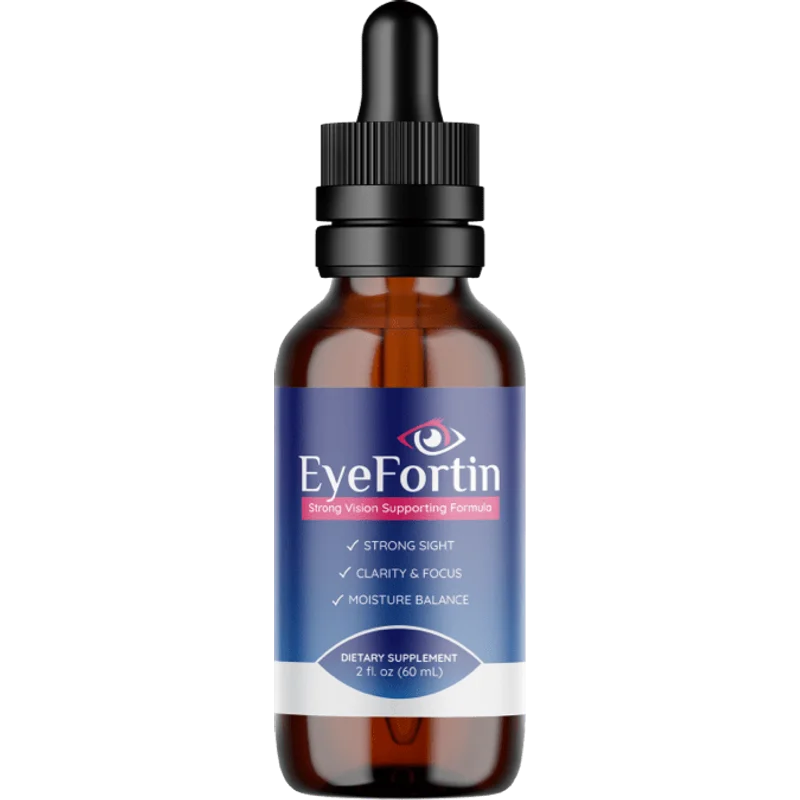
- ✓ Free U.S. shipping
- ✓ 60-day money-back guarantee

- ✓ Free U.S. shipping
- ✓ 2 free bonuses included
- ✓ 60-day money-back guarantee
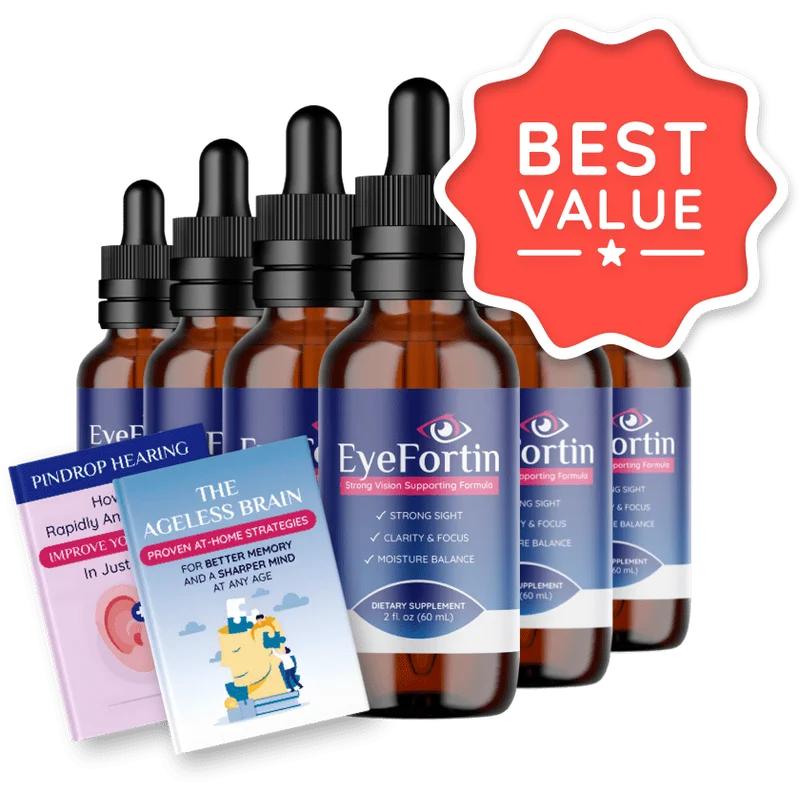
- ✓ Free U.S. shipping
- ✓ 2 free bonuses included
- ✓ 60-day money-back guarantee
Prices as published on the official page — verify live totals at checkout before ordering.
Research & References
Independent, third-party studies on each key ingredient — check the evidence yourself before you buy:
- Niacin — PubMed research ↗
- L-Glutamic Acid — PubMed research ↗
- L-Tyrosine — PubMed research ↗
- Taurine — PubMed research ↗
- Alpha GPC Powder — PubMed research ↗
- D-Aspartic Acid — PubMed research ↗
- Coleus Forskohlii Extract — PubMed research ↗
- Eyebright Extract — PubMed research ↗
- Huperzine A — PubMed research ↗
Authority sources: NIH Office of Dietary Supplements ↗ · PubMed Central ↗
Claim reality check
Dietary supplements are not reviewed like FDA-approved drugs before sale. Buyers should verify the official label, ingredient list, dosage, refund policy, and seller details before ordering. Avoid relying only on dramatic results, unverifiable review counts, unclear trust badges, or instant-result promises.
Natural wellness products should be evaluated with realistic expectations. Results vary by person, routine, diet, sleep, health conditions, and current medications.
Ready to check EyeFortin for yourself?
The official page has the current bundle pricing, the 60-day guarantee terms, and the live Supplement Facts panel — everything this guide told you to verify.